
Table of Contents
- What Makes Jewelry Ethical? The 2026 Consumer Checklist
- How to Identify Ethical Jewelry: Certifications and Red Flags
- Recycled Gold Jewelry Benefits: Why Pre-Owned Metals Matter
- Lab-Grown vs Mined Diamonds: Which Is the Better Gift?
- Best Ethical Jewelry for Gifts: 6 Curated Picks for Every Budget
- The Hidden Gap: End-of-Life Jewelry Recycling and Circular Economy
- Conclusion: Giving Gifts That Align With Your Values
- Frequently Asked Questions
Last Updated: September 18, 2026
What Makes Jewelry Ethical? The 2026 Consumer Checklist
The sustainable jewelry market reached roughly $75.55 billion in 2026 and is projected to hit $126.31 billion by 2035, according to Business Research Insights' sustainable jewelry market report. That growth tells you something important: shoppers now treat ethical jewelry as a standard, not a niche. At W û r a, we built our entire collection around that shift, using 100% recycled materials and ethically sourced .925 Italian sterling silver.
So what actually separates an ethical piece from a marketing slogan? Ethical jewelry is jewelry made from metals and stones that can be traced to verified, conflict-free, and fair-labor origins. That definition comes from industry experts, and it rests on four pillars: recycled precious metals, traceable gemstone origin, fair wages for workers, and honest environmental claims.
The 2026 checklist:
- Recycled metals in the alloy, not just "responsibly sourced" language
- Conflict-free stones with documented origin
- Fair-labor certification from a recognized body
- Supply chain transparency you can verify, not just read
Miss any one of these and you're buying a story, not an ethical piece.
How to Identify Ethical Jewelry: Certifications and Red Flags
Identifying ethical jewelry starts with paperwork, not packaging. A legitimate brand will name its certifications and trace its materials without you having to dig. The harder skill is telling a verified certification apart from a self-proclaimed "ethical" label, and that distinction is where most gift buyers get fooled.
What each certification actually verifies
Certifications are not interchangeable. Each one covers a different part of the supply chain, so a single piece can carry one, several, or none.
- Responsible Jewellery Council (RJC), a membership and certification body that audits business practices across the supply chain, including human rights, labor conditions, and environmental management. It certifies companies and their management systems, not individual stones or pieces.
- Fairmined, certification for artisanal and small-scale gold mining operations. It verifies fair pay, safe working conditions, and community development at the mine level, and the certified gold is tracked through the chain of custody.
- Fair Trade (Fairtrade International), similar mine-level focus on small-scale gold, with a premium paid back to mining communities.
- SCS Global Services, a third-party certifier that verifies recycled content claims (among other environmental standards). This is the certification that backs up a "100% recycled" statement with an audit rather than a slogan.
- Kimberley Process, a government-backed scheme that certifies rough diamonds as conflict-free at the border. It addresses conflict financing, not labor conditions or environmental impact, so it is a floor, not a ceiling.
How to verify a certification in about two minutes
The difference between a real certification and a marketing word is whether you can confirm it independently. A practical check:
- Get the exact certification name and the certifying body. "Ethically sourced" is not a certification. "Fairmined certified gold, certificate number X" is.
- Look for a certificate or license number on the product page, packaging, or receipt.
- Check the certifying body's own public directory. RJC, Fairmined, and SCS all maintain searchable lists of certified members and licensees. If the brand is not listed, the claim is unverified.
- Confirm the scope. A company-level RJC certification does not automatically mean every stone in every piece is traceable. Ask which specific material the certification covers.
A common pattern among greenwashers is to display a certification logo that belongs to a supplier, a parent company, or a single product line, then imply it applies to the whole catalog. If a brand cannot tell you which certification covers this specific piece, treat the claim as unverified.
Red flags that survive a quick scan
- No named certifying body, only adjectives ("conscious," "clean," "planet-friendly").
- A logo with no certificate number you can look up.
- Certification that covers the company but not the material in the piece you're buying.
- Dropshipper storefronts reselling mass-produced pieces under a sustainability label, often with stock photos and no supplier information.
- "Recycled" with no third-party verification, recycled content is exactly the kind of claim SCS-style certification exists to confirm.
Ask one question before buying: "Which certification covers this piece, and what is the certificate number?" A real ethical brand answers in one sentence.
Recycled Gold Jewelry Benefits: Why Pre-Owned Metals Matter
Recycled gold jewelry benefits go beyond the environmental story. Recycled gold is now the industry standard for sustainable collections, and consumers are actively prioritizing it alongside lab-grown diamonds and ethically sourced gemstones when choosing gifts, according to Lia Atelier's 2026 sustainable jewelry trends report.
The core benefit is simple: recycled gold and recycled sterling silver re-enter the supply chain without new mining. No new pits, no new soil disturbance, no new mercury runoff.
Where recycled metals actually save you money
Most guides frame recycled metals as an environmental choice and stop there. The overlooked benefit is economic: because recycled gold and silver skip the cost of new extraction, the material itself can be sourced at a lower input cost, and that savings is where entry-level ethical gifting becomes possible.
Stunning 0.2 Carat Moissanite Waterdrop →
A few practical notes for budget-conscious gifting:
- Recycled sterling silver is the entry point. It costs a fraction of gold, takes the same finishes (rhodium plating for tarnish resistance), and holds up to daily wear.
- Gold vermeil is the mid-tier move. A thick layer of gold over recycled sterling silver gives the look of solid gold at a fraction of the price. Look for a vermeil thickness of at least 2.5 microns to ensure it wears well.
- Recycled gold fill is another option between vermeil and solid gold, with a thicker gold layer bonded to a base metal.
- Ask what percentage is recycled. "Made with recycled materials" can mean anything. A verified claim names the percentage and the certifier.
The quality question, settled
Recycled metal is chemically identical to mined metal. It is refined to the same purity standards, hallmarked the same way, and alloyed to the same specifications. The only difference is origin. That means a recycled silver piece will not tarnish faster, wear thinner, or lose value relative to a mined equivalent, and for a gift, that means you can choose the ethical option without a quality caveat.
Lab-Grown vs Mined Diamonds: Which Is the Better Gift?
Lab-grown diamonds now hold a 56.8% market share in the United States, according to Lia Atelier's 2026 trend analysis. That's not a trend anymore. That's the majority preference, driven by ethics and price.
| Factor | Lab-Grown Diamonds | Mined Diamonds |
|---|---|---|
| Origin traceability | Documented at creation | Depends on mine-to-market chain |
| Environmental impact | No mining required | Significant land and water use |
| Price for same carat | Lower | Higher |
| Certification | Graded by independent labs | Graded by independent labs |
| Resale value | Lower | Historically higher |
Best Ethical Jewelry for Gifts: 6 Curated Picks for Every Budget
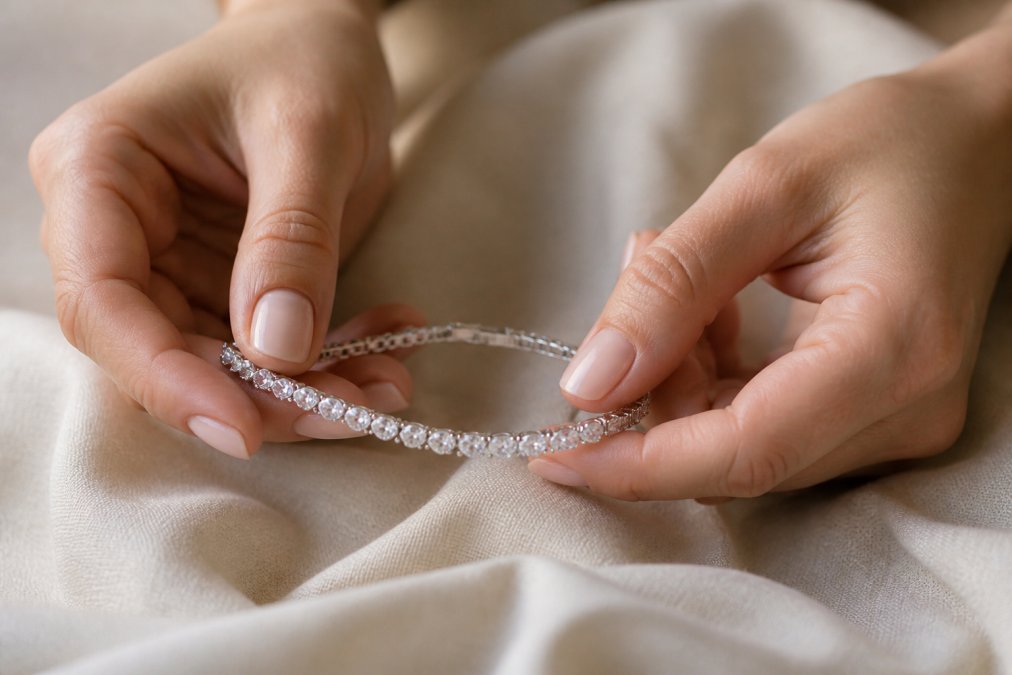
The best ethical jewelry for gifts balances three things: verified materials, lasting quality, and a price that fits your occasion. Every piece below comes from W û r a's collection.
The Hidden Gap: End-of-Life Jewelry Recycling and Circular Economy
Most ethical jewelry guides stop at the point of purchase. That's a mistake. The circular economy for jewelry includes what happens when a piece is no longer worn, and this is where the industry still has real work to do.
What you can do as a gift-giver:
- Buy pieces built to last, not to be replaced in two years
- Choose timeless designs over trend-driven ones
- Ask brands whether they take back or recycle old pieces
- Pass pieces down rather than discarding them
Conclusion: Giving Gifts That Align With Your Values
Choosing ethical jewelry for gifts comes down to asking better questions: where did the metal come from, who certified it, and will it last. The brands that answer clearly are the ones worth your money.
Frequently Asked Questions
What makes jewelry considered 'ethical'?
Ethical jewelry features metals and stones that can be traced to verified, conflict-free, and fair-labor origins. This includes using recycled metals, lab-grown diamonds, and ethically sourced gemstones. According to AJ Luxe (2026), industry experts define ethical jewelry by its traceability and commitment to fair labor practices throughout the supply chain.
How can I verify if a jewelry brand is truly sustainable?
Look for third-party certifications like Responsible Jewellery Council (RJC) or Fairmined. Request supply chain transparency details and check if the brand uses recycled gold or lab-grown diamonds. Be wary of vague claims; SCS Global Services (2026) notes that rigorous verification is needed to avoid greenwashing.
Are recycled metals as durable as newly mined metals?
Yes, recycled gold and sterling silver maintain the same physical properties as newly mined metals. They are refined to the same purity standards, so durability is identical. The difference lies in environmental impact: recycled jewelry eliminates the need for new mining, preventing soil disturbance and degradation, according to SCS Global Services (2026).
Is lab-grown diamond jewelry considered ethical?
Lab-grown diamonds are widely considered ethical because they avoid the environmental and social issues associated with mining. They hold a 56.8% market share in the United States (Lia Atelier, 2026) and reached a global valuation of $12.8 billion in 2025 (IceCartel, 2025), reflecting their growing acceptance as a responsible alternative.
What should I look for when buying eco-friendly jewelry gifts?
Prioritize pieces made from recycled gold or sterling silver, conflict-free gemstones, and lab-grown diamonds. Check for traceability documentation and certifications like Fairmined or RJC. Also consider the brand's packaging: eco-friendly packaging and a clear sustainability policy indicate a genuine commitment to ethical sourcing.